

Author: Dr. Feride Nur Haskaraca Kizilay
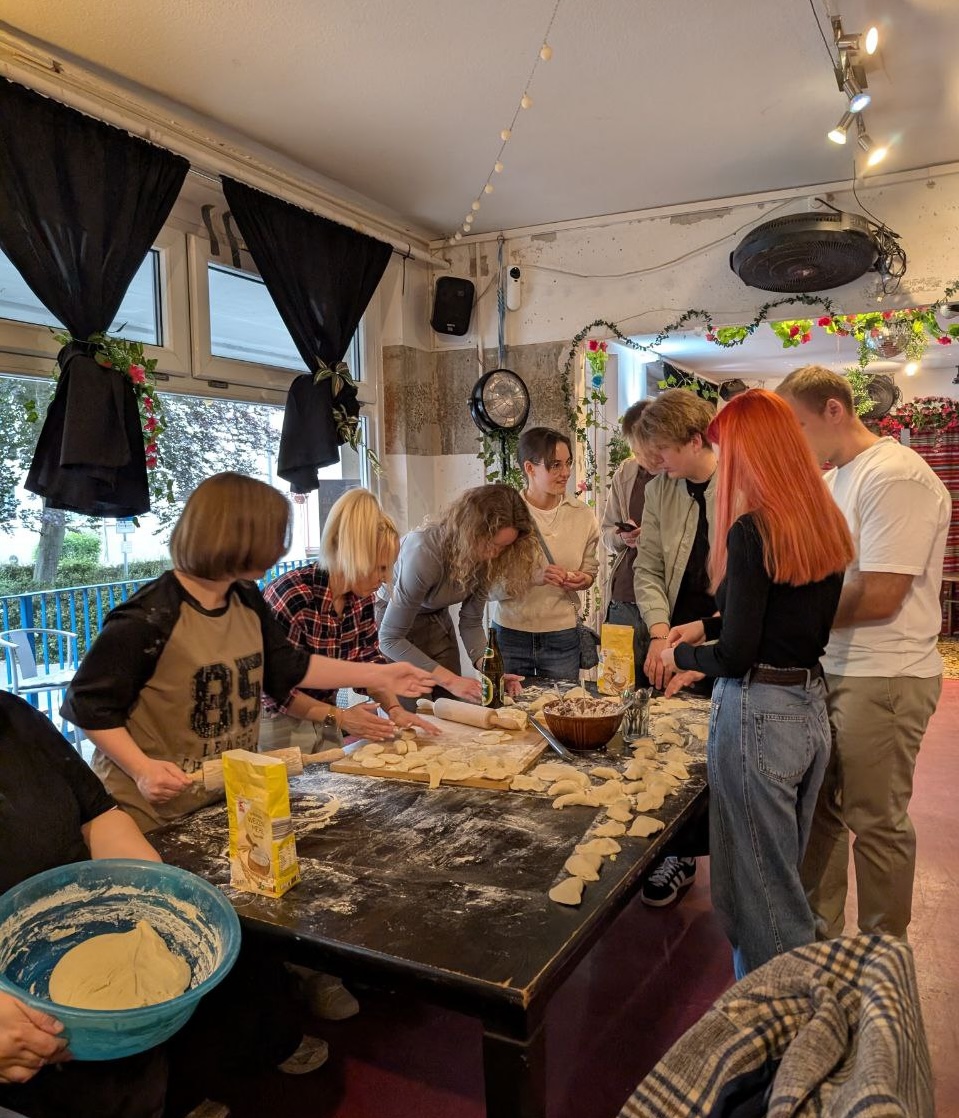
Image: Peer support among Ukrainian refugees in Germany: Baking Varenyky together.
A new reality of displacement
Since Russia’s invasion of Ukraine in 2022, more than six million Ukrainians have fled their homes, seeking refuge across Europe from Poland and Romania to Germany, Spain, and the United Kingdom (UNHCR, 2024). Germany alone hosts nearly one-third of them.
While European countries have provided shelter, work rights, and healthcare, emotional and mental well-being remain major gaps. Because most men are required to stay in Ukraine, most refugees are women, children, and the elderly. Many women juggle caring for families, navigating foreign bureaucracies, and coping with trauma all at once. Highly educated women often end up in jobs far below their skill level, and children face interrupted schooling and language barriers.
Hidden wounds: Mental health in displacement
The psychological burden of war and immigration runs deep. Studies show high levels of anxiety, depression, and post-traumatic stress among Ukrainian refugees, especially women who carry both emotional and caregiving responsibilities (e.g., Buchcik et al., 2023; Rizzi et al., 2022). While some find relief through volunteering or physical activity, many face barriers to mental health care such as language difficulties, long waiting times, or a lack of Ukrainian-speaking professionals (Budosan et al., 2023). As a result, informal community networks and peer circles have become a vital source of emotional support.
From therapy to togetherness
Across Europe, new programs are emerging to support displaced Ukrainians – from traditional psychotherapy and digital counseling to meaning-centered group sessions for women (e.g., Costanza et al., 2022). While these efforts show promise, many remain small-scale, fragmented, or inaccessible to those most in need. They often require trained professionals, stable funding, and translation; all of which limit their reach. That’s where peer-support models come in.
The power of peer support
Peer support means people helping people: individuals who share similar experiences offering understanding, empathy, and guidance to each other. This approach has improved mental well-being in refugee communities worldwide (e.g., Abo-Rass et al., 2025). What makes peer support especially powerful for Ukrainians is its deep cultural fit. Ukrainian society values solidarity and mutual aid. Throughout history, Ukrainians have relied on collective effort, whether during the Maidan protests or local volunteer brigades, to get through crisis. These traditions of caregiving and cooperation can be harnessed in structured peer-support programs, where trained community members facilitate group discussions, organize mutual aid, and promote emotional well-being. Such models are cost-effective, scalable, and rooted in familiar cultural values.
Cultural strength as a source of healing
Maintaining human connection is a lifeline. Contact with loved ones, even across borders, has been shown to strengthen resilience and protect against despair (e.g., Rizzi et al, 2022). Community networks, spiritual practices, and shared routines serve as “psychological capital,” helping people adapt to displacement. Peer-support programs tap into these same strengths. They not only address mental health but also restore a sense of belonging, control and purpose. In this way, they complement professional care and can reach those who might otherwise remain isolated.
A call for broader action
To make a lasting impact, peer-support interventions need recognition, funding, and integration into national mental health systems. Training Ukrainian refugees as peer facilitators can empower communities from within, while collaboration with NGOs and host governments can ensure sustainability. As Europe continues to host millions of displaced Ukrainians, building community-driven mental health support is not just compassionate, it’s also practical. By investing in social connection, we invest in recovery. In a context where displacement is likely to remain long-term, strengthening community-based mental health support is both a humane and pragmatic response. Peer support offers a way to transform shared hardship into collective resilience.
Referenzen
Abo-Rass, F., Nakash, O., Friedman, L., O’Neill, P., & Torres, M. E. (2025). Group peer support among immigrants and refugees: a scoping review. International Journal of Mental Health, 1–24. https://doi.org/10.1080/00207411.2025.2485710
Buchcik, J., Kovach, V., & Adedeji, A. (2023). Mental health outcomes and quality of life of Ukrainian refugees in Germany. Health and Quality of Life Outcomes, 21(1), 23. https://doi.org/10.1186/s12955-023-02101-5
Budosan, B., Castro, J., Kortusova, P., & Svobodova, I. (2023). Challenges and opportunities for mental health and psychosocial support programming during Ukraine refugee crisis in Czechia. Intervention Journal of Mental Health and Psychosocial Support in Conflict Affected Areas, 21(2), 107-115. . https://doi.org/10.4103/intv.intv_19_23
Costanza, A., Amerio, A., Aguglia, A., Magnani, L., Huguelet, P., Serafini, G., … & Amore, M. (2022). Meaning-centered therapy in Ukraine’s war refugees: An attempt to cope with the absurd?. Frontiers in Psychology, 13, 1067191. https://doi.org/10.3389/fpsyg.2022.1067191
Rizzi, D., Ciuffo, G., Sandoli, G., Mangiagalli, M., de Angelis, P., Scavuzzo, G., … & Ionio, C. (2022). Running away from the war in Ukraine: the impact on mental health of internally displaced persons (IDPs) and refugees in transit in Poland. International Journal of Environmental Research and Public Health, 19(24), 16439. https://doi.org/10.3390/ijerph192416439
UNHCR (2024). Ukraine situation regional refugee response plan – January 2024 update. https://data.unhcr.org/en/situations/ukraine