

Author: Pia Gleich
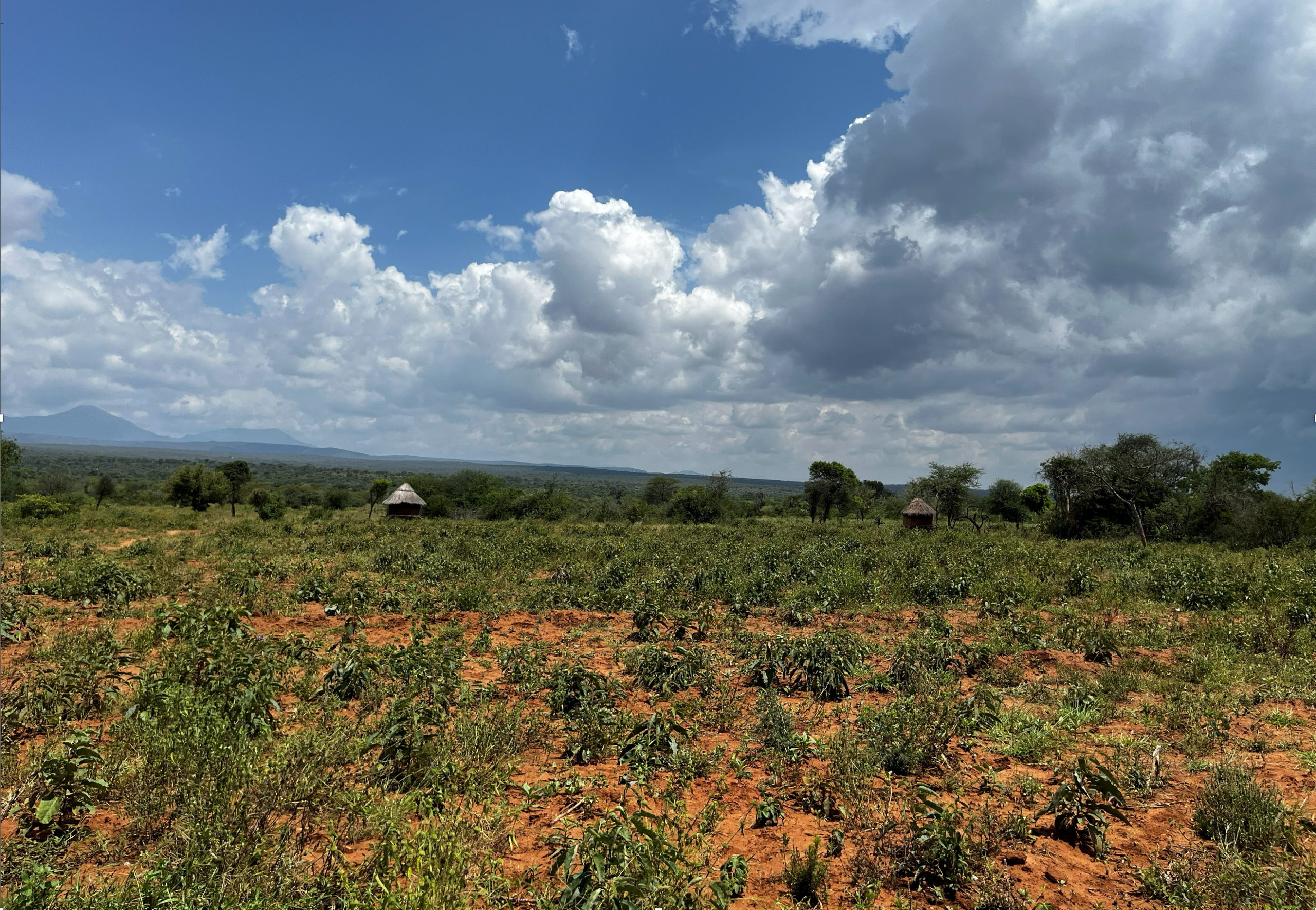
Image: Destroyed crops and harvest storage.
A semi-arid cross-border region
Karamoja – a region with a semi-arid climate, recurring droughts, and irregular rainy seasons – stretches across several national borders and encompasses parts of Uganda, Kenya and South Sudan. Around 1.2 million people live in an area of approximately 27,500 square kilometres – mainly cattle breeders and farmers whose livelihoods depend on livestock breeding, small-scale agriculture, and regional trade. Despite its potential, Karamoja faces ongoing challenges: food insecurity, limited access to basic services, high poverty rates, and vulnerability to climate shocks.
Strengthening livelihoods and cross-border cooperation
In recent years, government institutions, local civil society organizations, and international development partners have stepped up efforts to strengthen livelihoods, expand access to education and health services, and promote peace and security following decades of cattle raiding and protracted conflict. Owing to its strategic location at the intersection of Uganda, Kenya, and South Sudan, the Karamoja region plays a critical role in cross-border cooperation related to trade, livestock mobility, and conflict prevention. As a result, cross-border coordination mechanisms have been increasingly reinforced to mitigate conflict risks, enhance market integration, and facilitate the safe and regulated movement of people and livestock across national boundaries.
Multi-stakeholder review of cross-border pilot implementation
At the end of the year, a United Nations Development Programme (UNDP) forum took place, bringing together representatives from government institutions, UN organizations, and civil society, in which a colleague and I participated, representing Hudara. We reflected on progress, challenges, and lessons learned, and discussed necessary future steps. Over the past eighteen months, a collaboration body coordinated by UNDP has been working closely to implement an integrated pilot project in the border areas of Turkana and West Pokot in Kenya and Karamoja in Uganda. Results on strengthening livelihoods, improving resilience, and promoting cross-border cooperation were compiled and discussed.
Systemic gaps require integrative solutions
Throughout the forum, participants expressed a strong sense of urgency. Limited access to finance remains one of the main barriers to economic growth—particularly for women, who often struggle to obtain credit or land, restricting opportunities to start businesses or transition from pastoralism to agro-pastoralism or agriculture. The urgent need for reliable access to clean water was also emphasized, as many communities still lack safe sources. Owing to its remoteness from national capitals, the Karamoja cluster continues to face gaps in government support and infrastructure. Discussions underscored the importance of addressing these interconnected challenges through integrated approaches, including capacity-building programs that link water management, agriculture, peacebuilding, gender equality, and mental health, especially in the context of climate change.
Field insights into grassroots experiences and regional development dynamics
As part of the forum, we gathered first-hand impressions through field visits and consultations. We met with an agricultural women’s cooperative, where members described the challenges they face, including limited land ownership, changing rainfall patterns, and recurring crop failures. At the same time, the strength and solidarity of their collective approach became evident. Another initiative presented was a local honey production enterprise, which serves as an important complementary livelihood to agriculture. In addition, larger-scale, foreign and industrial activities, such as a cement factory, were visited and discussed regarding their social, economic, and environmental impacts on the region.
Where sustainable change begins
As we continue to learn and strengthen our collaboration, the Karamoja forum underscored a fundamental insight: sustainable and inclusive change begins with genuine collaboration, listening to different voices from the communities themselves, and jointly gaining a deep understanding of local realities. Recognizing the diversity of experiences and valuing the knowledge of communities are essential foundations for meaningful engagement. Building on this, effective partnerships must bridge locally identified priorities with national, regional, and international support to ensure that actions are context-sensitive, locally anchored, and can promote long-term resilience.